
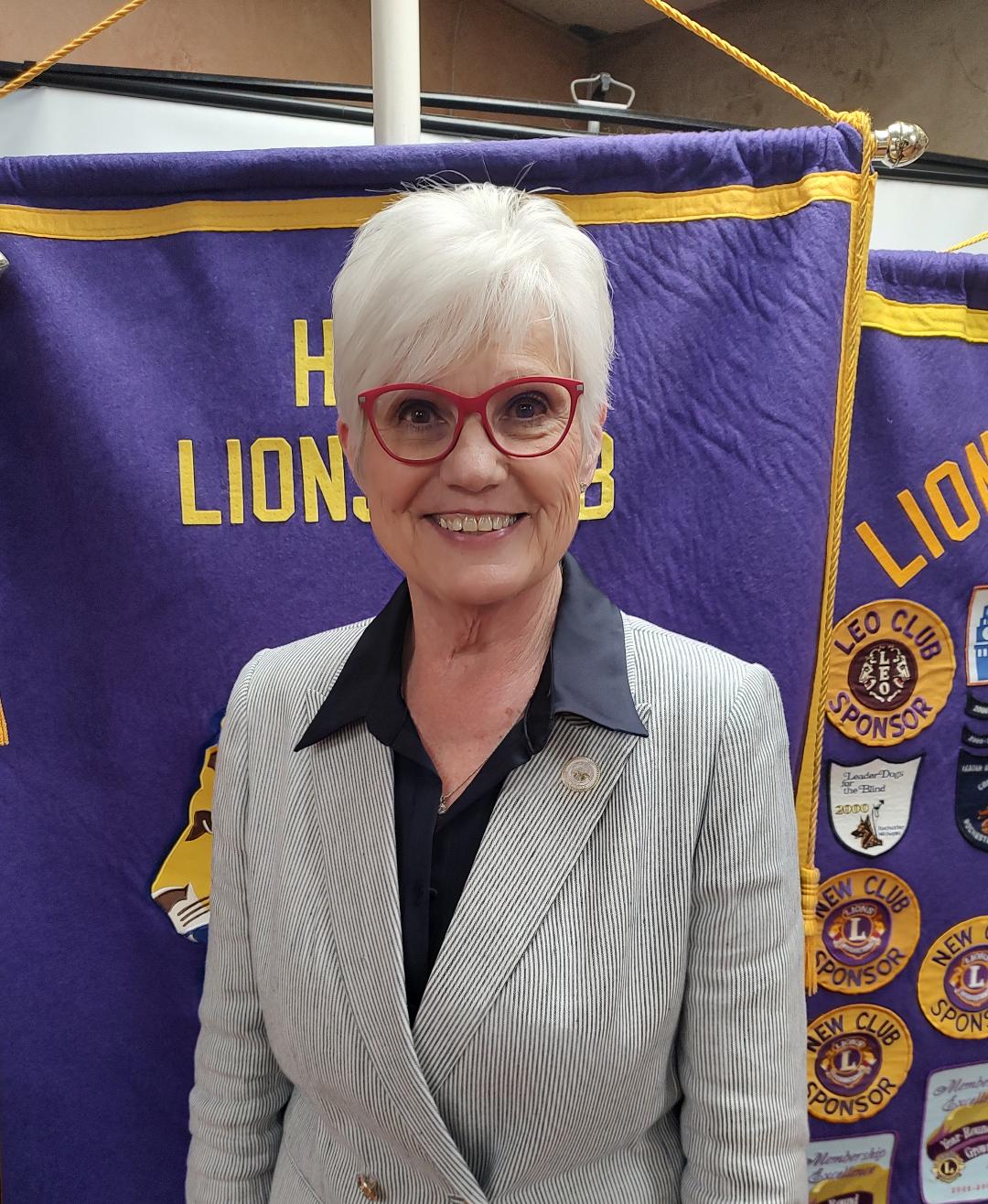

The Hope Lions Club heard from State Representative Dolly Henley on Monday (6-16). Henley gave an update on the legislation passed during this year’s legislative session.
There were 1,026 laws the house and senate passed that were signed by Governor Sanders. Henley’s source was the Bureau of Legislative Research.
Henley started with Act #1008. She noted this removes all the state taxes from groceries. Henley reminded the Lions that local taxes will remain in place on groceries.
The Homestead Property Tax Credit was increased by $100. That means it’s up to $600 and affects the assessment period that began January of this year.
Act #802 amends income tax liability for rollover contributions on the “Arkansas’s Brighter Future” law passed several years ago. This means if money saved in this plan for a child or grandchild’s college education isn’t used for higher education, it can be rolled into a Roth I.R.A. with no tax liability.
Henley noted Act #373 redesigned regulatory framework for electric and gas utilities. This will allow the utilities to charge a small fee to go towards future projects.
Another law Henley discussed will restrict pharmacy benefits managers will not be allowed to sell retail pharmaceuticals in Arkansas.
Act #140 called “Healthy Moms, Healthy Babies” was passed. It is an Arkansas Medicaid program to increase coverage for pregnant mothers and their babies.
Act #774 is the law that will require work requirements and require DHS to track pharmacy rebates.
Henley said there were several election laws passed. She noted in the next election-cycle, canvassers will be required to disclose fraud as a criminal offense to the signers. These canvassers will need to review photo I.D.’s, file an affidavit certifying compliance, and will read the ballot title to the signer. Canvassers must be a resident of Arkansas. Also, the state D.F. & A. a fiscal impact statement to all constitutional amendments to be printed on the ballots. The Attorney General must also reject ballot titles that can’t be read at an 8th grade reading level. Henley also talked about legislation that stabilizes primary election dates.
Henley also discussed a bill that will provide several scholarship programs for vocational and technical schools. She also talked about increases in other state-sponsored scholarships.
Act #341 provides special tuition rates for concurrent courses. This also sets a new formula for grading K-12 schools. This also requires K-12 to give student data to higher education. The new law also restricts state supported higher education from taking action in regards to diversity, equity, and conclusion. The bill also prohibits public schools for granting excused absences for political protest purposes unless certain conditions are met. Colleges also have a similar law now.
Henley talked about Act #122. This is “Bell to Bell, no Cell” that would restrict the uses of cellphones in public schools. Henley noted her granddaughter was not happy with the bill!
Henley noted a positive law provides for free breakfasts for all public-school students. She also noted the school for the blind and the school for the deaf have been combined.
The legislature has increased funding per public school student for 2025-26 to $8,162. It will drop slightly in 2026-27 to $8,037. The drop will reflect a change in funding for employee’s insurance plans.
Henley noted she had gotten lots of feedback on a moratorium bill. She said act #921 prohibits moratoriums by state agencies on issuing permits in watersheds. This will be in effect for four years.
Act #505 amended the Freedom of Information Act. This offers some changes on meetings via such programs as Zoom. Also, bodies going into executive session must explain before going into executive session the reason they are doing so.
Act #499 establishes a state employee student loan program.
Act #116 repealed diversity, equity, and affirmative action policies in education, higher education, public employment, and procurement.
Act #955 designated multi-occupancy restrooms, changing rooms, and sleeping quarters be used by persons of the sex they are, not the sex they want to be.
There were several bills passed dealing with social media. Act #900 reduces the designation of a minor of the social media safety act from 18 to 16 and requires privacy and safety settings for a minor on social media platforms. Act #901 deals with punishing social media platforms that knowingly and willfully contributes to a minor’s suicide or suicide attempt. Act #952 prohibits websites and social media platforms from collecting personal data from children and teens. Act #982 creates a child contact protection act for a minor 13 and over and concerns earnings from social media creations.
Henley discussed Act #654 that enhances penalties for serious felonies by persons in the country illegally. Act #238 criminalizes unlawful squatting. Act #684 deals with preparing prison inmates for their reentry into society. Henley also detailed some human trafficking bills that increases offenses and restitution for human trafficking.
Henley noted the Revenue Stabilization Act increased 2.89 percent. The state budget is $6.5 billion dollars. Henley also brought an illustrated handout that showed how agencies are funded per dollar. The Department of Public Safety is budgeted 2 cents per dollar, public schools 43 cents, Department of Corrections 9.7 cents, Institution of Higher Education 12 cents, Department of Human Services and the Department of Health 29.9 cents, and general government and local aid 3.4 cents.
Henley thanked those who contacted her with their thoughts on the legislation she faced and encouraged others to feel free to share their thoughts in the future. She said the best part of her job is helping the folks back in her district.