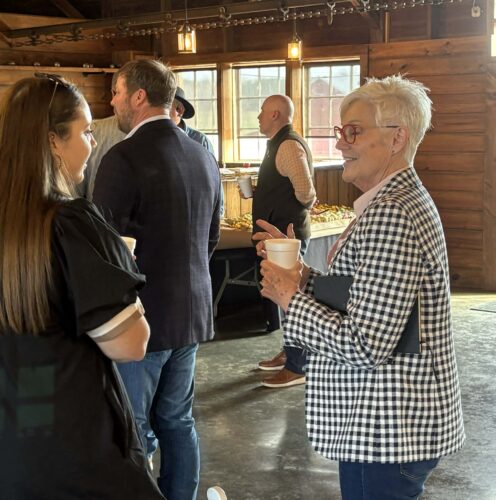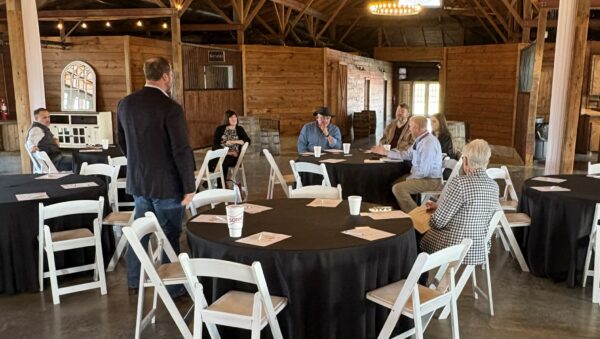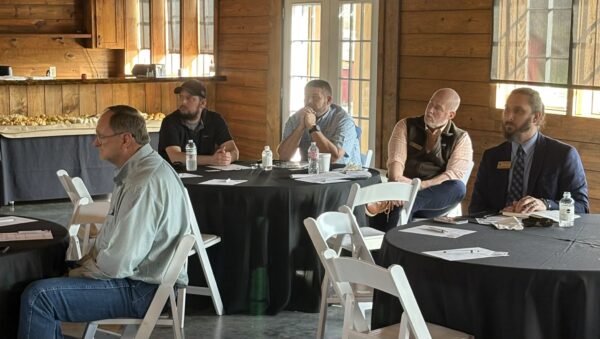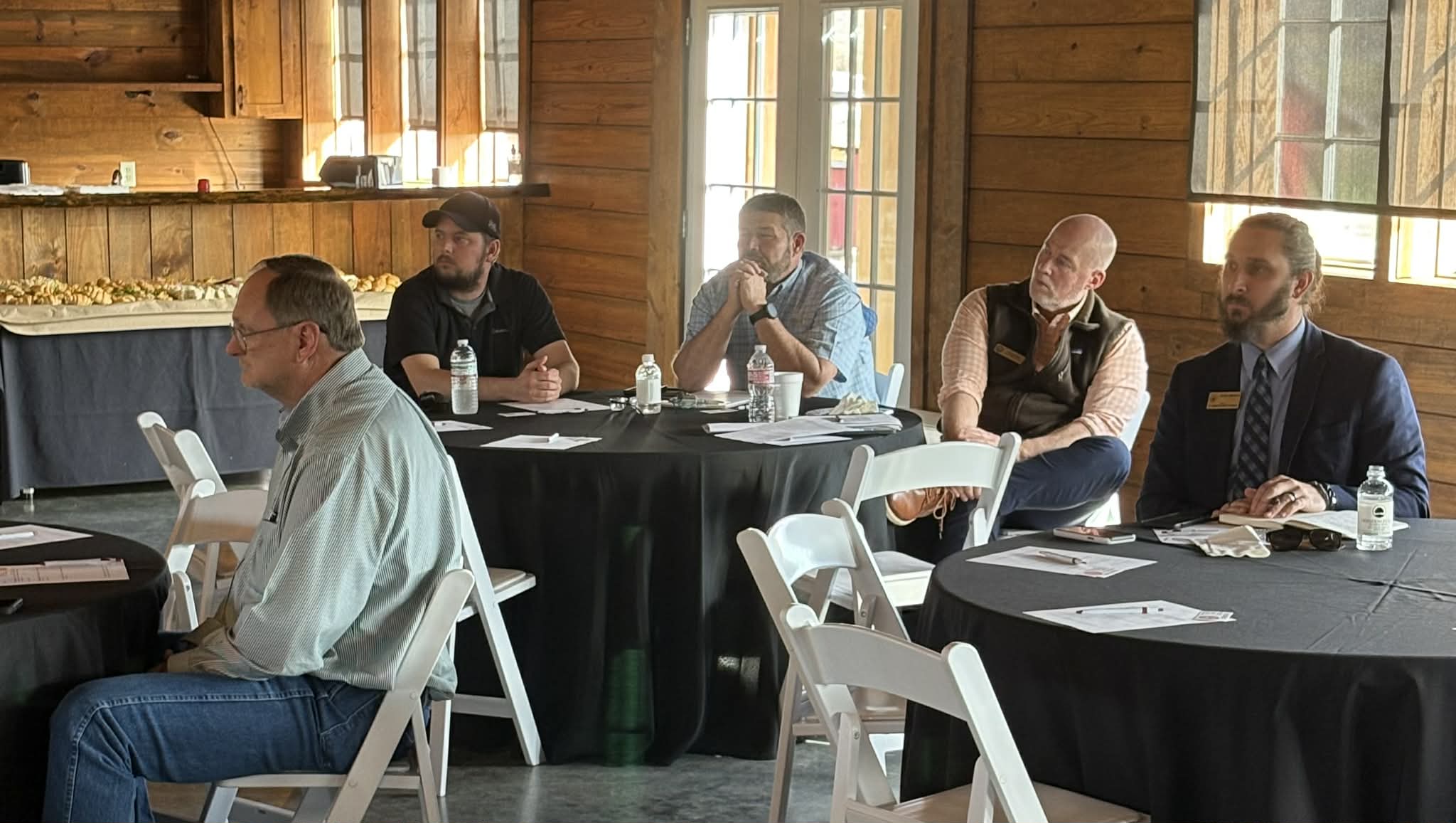

Prescott, Ark. – A town hall-style meeting was held on February 26, 2026, at The Barn at Willow Oak Acres in Nevada County, near Prescott, to address the severe impact of recent winter weather on poultry farms and agricultural operations across southwest Arkansas.
The meeting was opened by Nevada County Emergency Management Coordinator David Gummeson, who welcomed those in attendance. County judges, farmers, state representatives, and officials from federal agencies participated in the discussion, each introducing themselves before the meeting began.
Much of the conversation focused on public assistance (PA) and the difficulty counties face in meeting the required federal threshold. Because FEMA removed snow removal from the qualifying event, many counties may fall short of the $10 million requirement needed for federal disaster designation.
Individual assistance (IA) was also discussed, with representatives noting that neither ADEM nor FEMA is currently considering IA for farmers, nonprofits, homeowners, or businesses.
Attention then turned to the USDA and what programs might support poultry farmers dealing with collapsed houses and livestock losses.
County judges from Lafayette, Howard, Hempstead, and other southwest Arkansas counties expressed growing concern about looming deadlines. A 30-working-day response window—initiated January 23, 2026—is rapidly approaching. Gummeson guided the conversation and proposed requesting an extension to allow more time to gather required documentation. If federal assistance ultimately fails, state aid—though lower, at an estimated 35 percent compared to FEMA’s 75 percent—may be the only option. One participant questioned why aid could not be addressed locally before federal funds are sent abroad, urging FEMA to prioritize Arkansas communities.
State Representative Dolly Henley attended, along with representatives from U.S. Senators Tom Cotton and John Boozman’s offices.
A major challenge repeatedly cited was FEMA’s definition of qualifying loss. Snow-related structural collapses that killed poultry were not counted, as the agency requires animals to have died directly from freezing. Questions also arose regarding carcass disposal rules and how farmers were expected to reconcile regulatory mandates with immediate safety and sanitation needs. One county judge noted that constituents were pleading for help and emphasized that coordination among local governments could make a difference. It is understood that ADEM remains ready to respond to future emergencies, but the January storm’s impact is still being evaluated across our area, the nearby states of Louisiana, Mississippi, and Tennessee. Public disaster assistance remains on hold pending further review. Another judge highlighted that 137 newly elected justices across Arkansas need support in understanding emergency procedures and available aid programs. FEMA involvement, he stressed, is essential.
Questions were raised about how bankers and lenders might help poultry farmers and their needs. It was noted that USDA officials have received multiple emergency assistance requests. The Arkansas Poultry Federation and university extension services were mentioned as possible resources for additional guidance.
With deadlines tightening, concerns are growing that delays could cut counties off from federal consideration altogether. Notably, private homes and farmers currently have no realistic expectation of structural assistance, as the focus remains primarily on government and commercial buildings. Individual assistance requires meeting the same $10 million threshold as public assistance, and if the state meets it, the entire state becomes eligible. Under current rules, livestock, horses, and poultry losses count only if caused by freezing—not if animals die as a result of collapsing buildings. Participants also expressed concern that SBA loans would only place farmers deeper in debt, adding new loans onto existing ones already strained by disaster-related losses.
For many poultry producers, the financial burden of rebuilding collapsed houses could lead to business failure or bankruptcy. Farmers left the meeting with lingering uncertainty but a shared desire for solutions. Many had assumed such damage would be covered, but the complexity of federal definitions and requirements has left families and businesses facing a difficult path forward.