
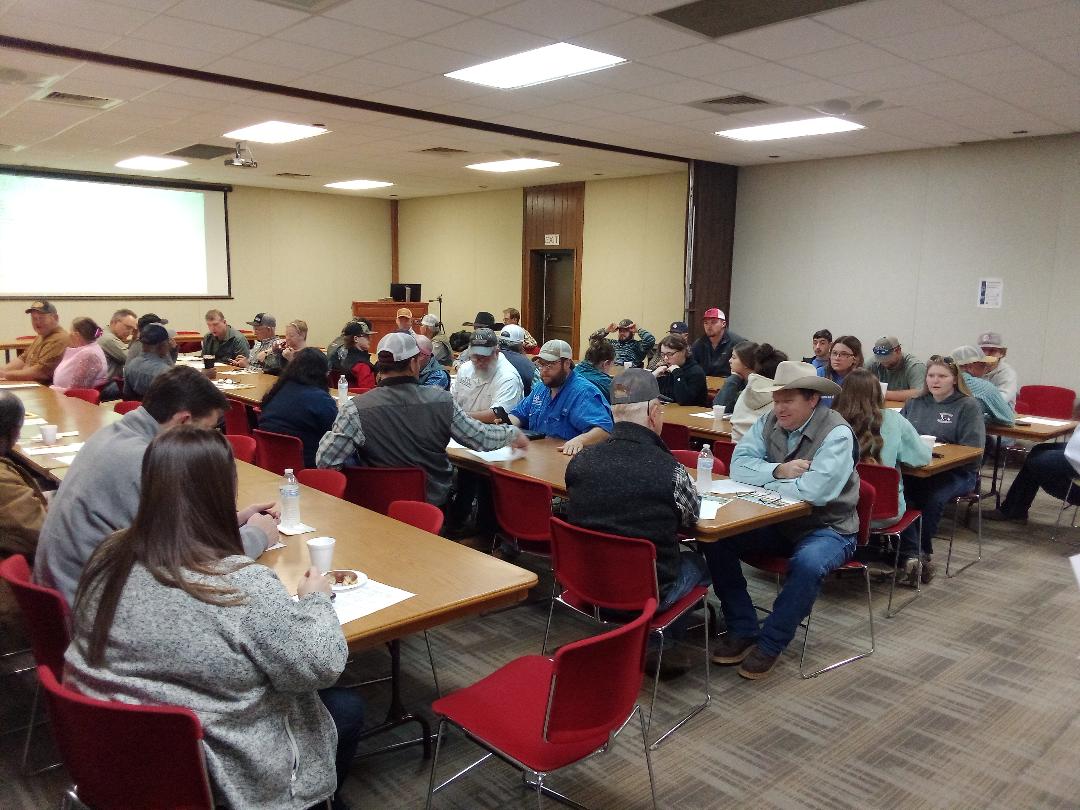

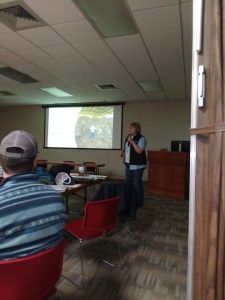
The University of Arkansas Division of Agriculture held a Beef and Forage Field Day at the Experiment Station on Friday (4-5). The event started off with a welcome by Station Director Dr. Daniel Rivera. He thanked the staff, the speakers and the district agriculture agents for their efforts.
Jonathan Kubesch, originally from Ohio, presented Future Forage Programs. After talking about his background and the difference between forage grown here and elsewhere in the country. He talked about the types of grass grown in Arkansas and stated it can be grown year-round here. Kubesch stated the best bang for the buck was 2 to 3 species. He also stared he had worked with native grasses and seen their benefits such as drought resistance and resilience. Kubesch stated there are thresholds for success with corn and soybeans but not for forage and asked why not. He also talked about building resilience with the unusual weather. An audience member asked if he had any solution to wild hog and he stated no. Clark County has a program on this topic.
Michelle Johnson talked about a research project she did last summer. This project related to which diets worked the best for cattle. She stated that Arkansas had some challenges being away from the corn belt and the large slaughterhouses. She compared feed lot diets with starch and byproduct diet. Johnson stated grass fed beef wasn’t really sustainable. As a result of a climate crisis in the 1980’s, row crop producers reached out to the university and their staff came up with the row crop verification program. Fertilizer prices, particularly potash, became unaffordable at $300-400. Producers soon chose other options, with the result of less production. Thirteen fields are enrolled in the program currently. She started she wanted to see perennials this year.
Les Walton talked about hay verification program and stated he had made five cuttings in Union County. This information took participants by surprise. Walton demonstrated a hay calculator online tool which shows the nutritional needs of different animals. A cow that has given birth needs either better hay or supplementation. Ouachita County Agriculture Agent Cary Weatherford talked about cutting 3 inches height and doing 4 cuttings. The total weight wasn’t 1000 pounds. The crop was sprayed in February to deter weeds. The question was asked if would make a difference to do a fire burn with the response fire has its place but so does spraying.
Maggie Justice, who came from Auburn University, has been working with the Extension for a year. Justice stated nutrition was something to think about year-round and to plan for. The objective needs to be thought about whether it is simply keeping the cattle alive until sale, breed them or as a tax write-off. Justice stressed that nutrition didn’t come in a bag and talked about issues such as where the water came from, minerals, and supplementation. In the Southeast forage can be grown year-round and a variety of forage can be produced. Cows that are lactating will have peak needs. Cold and hot weather can increase the needs.
Jake Cartwright talked about the Cattle Market outlook. Lunch and steak samples were provided. Ken Blue and Harold Newcomb talked about veterinarian round table vaccines. Lanny Ford talked about premiums and discounts in purchasing feeder stocker cattle.