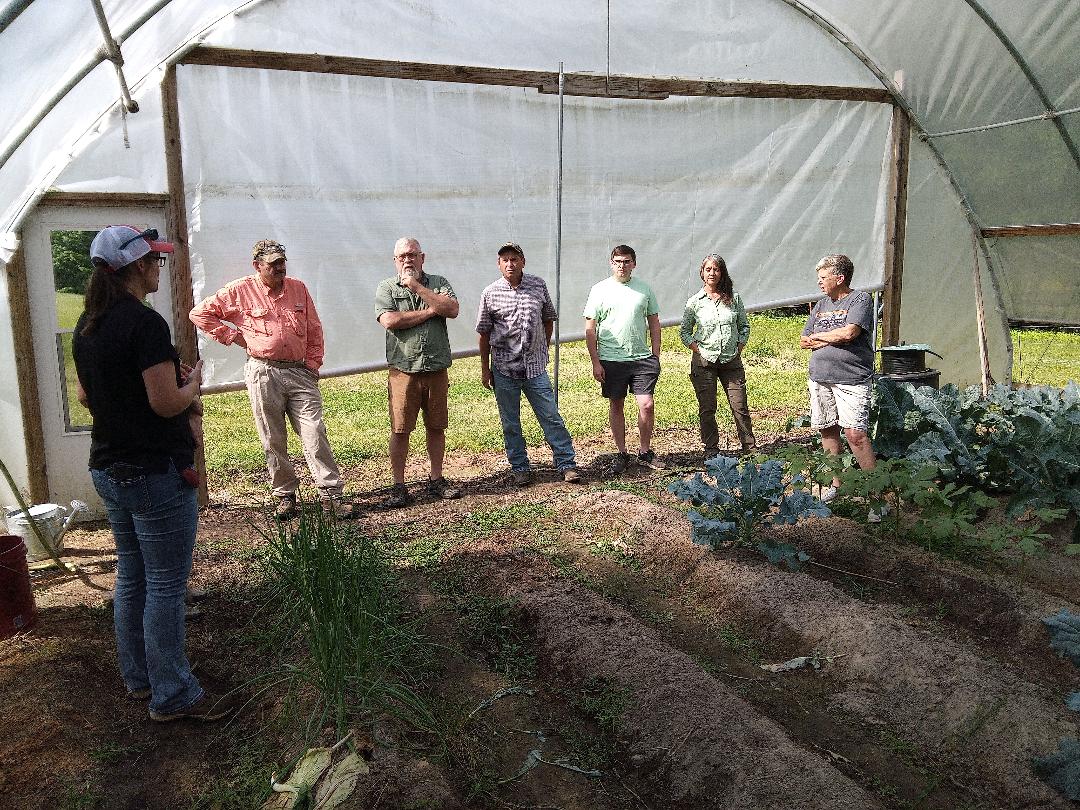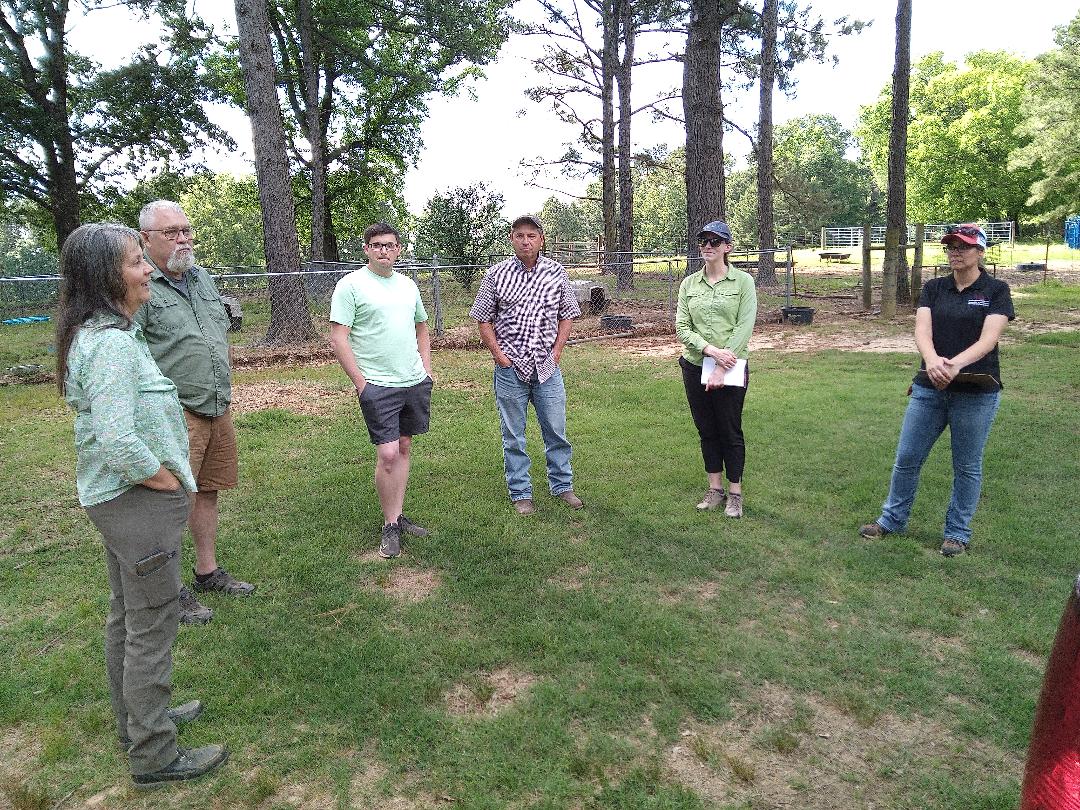

The Little Rock branch of the University of Arkansas Extension Service held a high tunnel workshop at Hannah’s Berries in Emmett and at the Experiment Station in Hope on Thursday (5-8). The workshop was led by Tonya Ernst who is stationed in Little Rock but travels the state. Ernst talked about soil borne pathogens that are aggravated by the lack of crop rotation. These pathogens are popping up all over the state. These pathogens take three years to get rid of.
Beans, cabbage and corn are not susceptible. For a gardener depending upon high value crops this is catastrophic since corn is never grown in greenhouses and cabbage are low value crops. Experts are teaming with ornamental specialists to see if they are safe. Flowers are becoming fairly profitable.
Ernst also talked about different trellising methods – the Florida weave which is good for determinate tomatoes and lower and lean which is good for indeterminate. The second one involves adding structure to the High tunnel as during a wind the added weight can cause the tunnel to fall over.
The Extension Service is trying to spread out workshops which are smaller so that more people can attend.
The first location for the workshop, Hannah’s berries got their first high tunnel 10 years ago. Different methods being tried there included the use of plastic called solarization. While black plastic is traditional, white plastic is being experimented with as it reflects more light and keeps the soil temperatures down. The soil needs to be wet and the edges covered and sealed. The tunnel was also sealed and temperature placed in the high tunnel. The temperature was measured to be at least 120 degrees under the plastic.
Hannah’s Berries rotate their crops.
Plastic killed the wild blackberry vines. Supports keep the doors from bending.
Weeds are one of the biggest issues and can harbor and host insects as well as removing nutrients from soil and shading out other plants. Leaving plant refuse also can host insects which travel to other plants. The soil needs to be covered by plastic for 4-6 weeks.
High Tunnels started in the North. It is so hot here in the south a good idea may be to solarize during the summer.
In growing in high tunnels where the soil is removed with the weeds and crop refuse the soil has to be augmented.
Everything needs to be in place when solarization is done as it only goes six inches deep. If you dig deeper, you will bring up weed seeds.
Inside the high tunnel it got so hot it melted one of the connectors.
Tomatoes can handle up to 90 degrees temperatures while cabbages and other similar crops need cooler temperatures.
For irrigation, everything is on a timer. The drip tape is buried. There is a regulator. Hannah’s Berries fertilize once a week and irrigate 2 hours every 2 days.
It is important that the soil isn’t over salted with fertilization as the plants take what they need and leave the rest. Since no water is naturally in the soil irrigation is needed.
High tunnels have very high levels of salt buildup. Out in the field rain washes the excess salt out.
In sampling the soil Hannah’s Berries takes three samples and mix them together.
Ph soil tests are free. Those which test for environmental contamination or organic matter cost money. Environmental contaminants build up every year.
Most of the high tunnel growers are new since the state has taken time to correctly learn how to it and a fair number of farmers got rid of theirs earlier.
Crops can be planted 4-6 weeks earlier than the last frost date inside high tunnels and earlier if row covers are used but one must be careful with row covers since they can tear crops up.
Hannah’s Berries grow inside three and a half inch pots and plant beets, okra, and cucumbers directly in the ground.
For using a shade cloth February is too soon as it dramatically reduces productivity. White shade cloths reflect more light and keep high tunnels cooler.
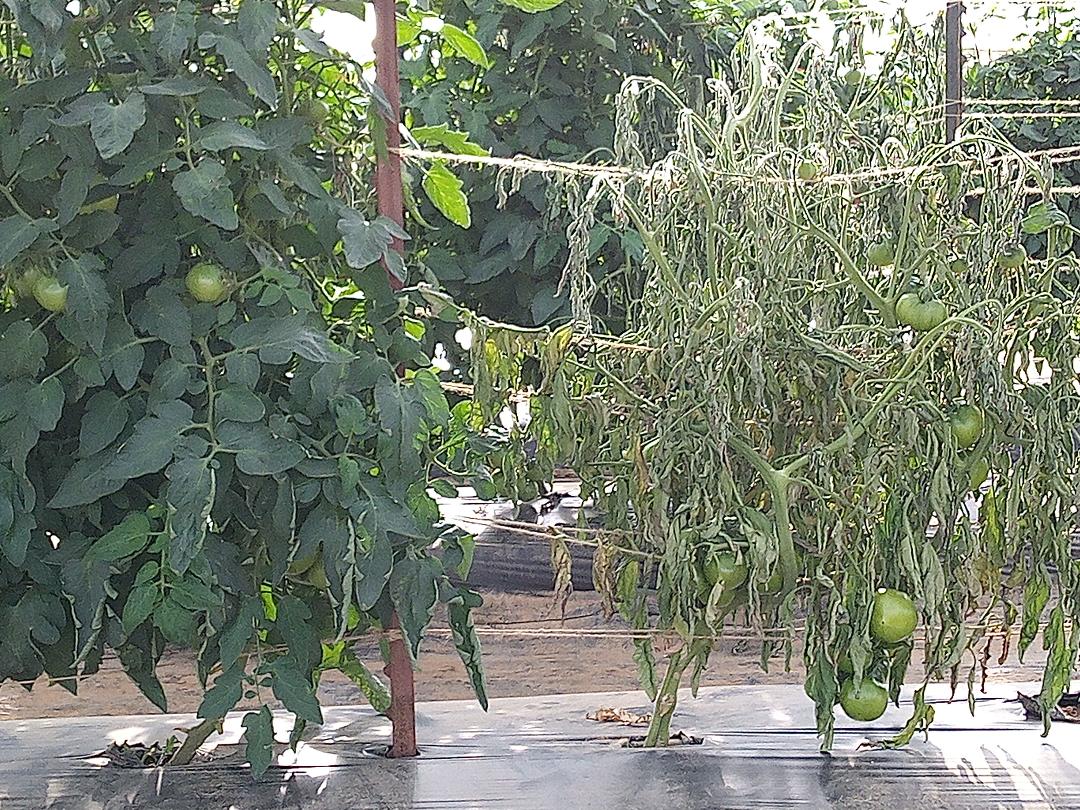
The presence of bacterial wilt was demonstrated at the Experiment Station.
Solarization doesn’t go deep enough to kill it. One grower grew successfully tomatoes hydroponically. Movable tunnels are another solution to disease buildup. Water spreads the disease.
Fungal diseases are spread differently. Some are rain splash, others heat and moisture.
There are free guides that identify what a healthy plant looks like and help identify diseases.